Who Is Holding the Whole Household in Their Head? Sharing the Mental Load Fairly
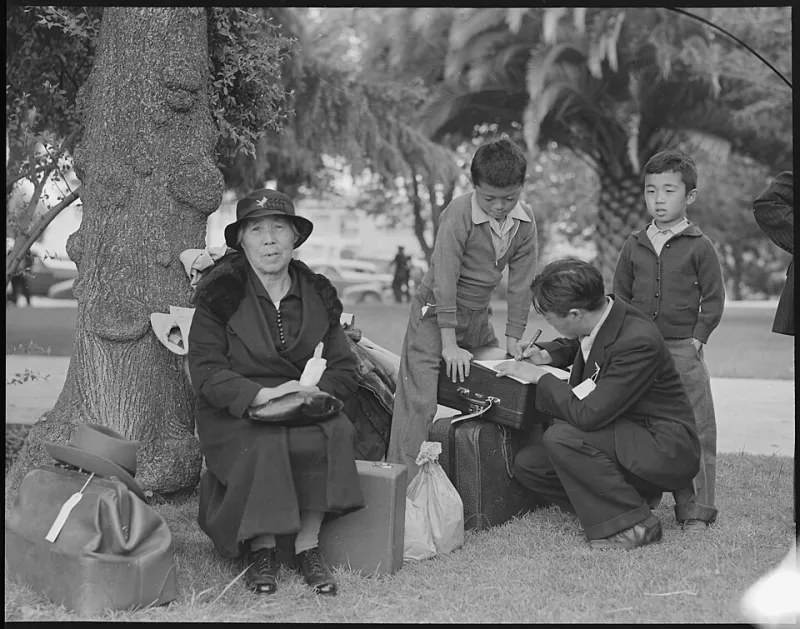
Photo: Dorothea Lange, Public domain, via Wikimedia Commons
There is a particular kind of tiredness that comes not from doing a great deal, but from holding a great deal. Remembering that the PE kit needs washing on Thursday. Noticing the milk is nearly out. Knowing which child has a friend's birthday this weekend and that a card must be bought. Anticipating that a work deadline will collide with parents' evening, and quietly rearranging things so that neither collapses.
This is the mental load: the cognitive and emotional work of running a household. It is largely invisible, frequently unpaid, and often shouldered by one person — usually the mother, though not always, and not only in two-parent households.
What the mental load actually consists of
It helps to break it down, because 'I do everything' is easy to dispute and hard to act on. The mental load tends to include four strands:
- Noticing: registering that something needs doing before anyone asks.
- Remembering: holding dates, routines, medication, appointments and deadlines in mind.
- Planning: working out the sequence, the cost, the logistics and the fallback.
- Anticipating: predicting problems and absorbing the emotional weather of the household.
The last one is the least visible and often the heaviest. It includes noticing that a child has gone quiet, that a partner is close to burnout, or that a family event will need careful handling.
Why it so often settles with one person
There is rarely a villain in this story. Habits form early, often before children arrive, and are reinforced by small efficiencies: it is quicker to do it yourself than to explain it. Workplace patterns matter too, as does the simple fact that the person who does more of the noticing becomes, by default, the person everyone else checks with.
It is also worth acknowledging that family setups vary enormously. Some households include a parent who works away, a carer for an elderly relative, a disabled adult, or a lone parent doing all of it with no one to redistribute to. The aim here is not to insist on a perfect 50/50 split, which is rarely realistic, but to make the load visible and then decide, together, how it might be carried more fairly.
Begin with a list, not a row
Most attempts to rebalance fail because they start mid-argument, at nine in the evening, when both people are tired. Try instead a written exercise, done separately and then compared.
Each adult spends fifteen minutes noting everything they believe they hold in their head for a fortnight — not just tasks, but the noticing and planning around them. Include the mundane: school communications, uniform, packed lunches, appointments, birthday cards, bins, birthdays, bills, medication, the dog's injections.
When you compare lists, resist scoring points. The purpose is shared sight of an invisible system. Many couples find the conversation shifts from 'you never help' to 'I genuinely did not know that was a thing you were tracking'.
Scripts that lower the temperature
A few phrases tend to work better than others:
- 'I am not asking you to do more of the same things. I am asking whether we can move some of the remembering across.'
- 'When I have to ask for something three times, it stops feeling shared. Can we agree who owns this one outright?'
- 'I would rather we worked out what is realistic than what is fair in theory.'
- 'What would make this easier for you to hold?'
Avoid opening with a list of grievances. Lead with what you want the household to feel like, not with what has gone wrong.
Household experiments worth trying
Assign ownership, not tasks. A task is done once; ownership means noticing, planning and completing, including the follow-up. If one person owns school communications, they read the emails, note the dates and arrange cover. This removes the 'asking' step, which is often the real source of resentment.
Run a two-week pilot. Changes feel safer when they are temporary. Agree that one person takes full ownership of, say, medical appointments and prescriptions for a fortnight, then review it. Small experiments are easier to adjust than grand declarations.
Hold a short weekly check-in. Fifteen minutes, same day each week, with a shared list. Cover the week ahead, who is where, and what might go wrong. Keep it practical and time-limited; this is a planning meeting, not a relationship review.
Create a single shared system. A calendar, a note, a whiteboard — one place, not three. The goal is that either adult can answer the question 'what is happening on Thursday?' without consulting the other.
Protect the person who is not the default. If one adult is the household's default, the other needs to be genuinely responsible for something, mistakes included. A partner who takes over the food shop but is checked up on has not really been given the load.
Keeping it fair over time
The mental load creeps back during busy seasons: illness, school holidays, a house move, a new job. Expect that, and schedule a review rather than waiting for resentment to build. A brief monthly question — 'is this still working, or has it drifted?' — prevents most of the difficulty.
It also helps to notice effort out loud. Households run better when the invisible work is named, even in small ways: 'thank you for remembering that' costs nothing and changes the atmosphere considerably.
When fairness is not the right frame
If one adult is unwell, caring for a relative, working night shifts, or if you are parenting alone, an equal split may not be available. In those seasons, the language of fairness can feel accusatory or simply irrelevant. What still helps is visibility: naming what is being carried, asking for specific help from people outside the household, and accepting that 'good enough' is a legitimate standard for a while.
Rebalancing the mental load is not a single conversation. It is a slow, practical redrawing of who holds what — done with curiosity rather than blame, and revisited as family life changes.